
-33%
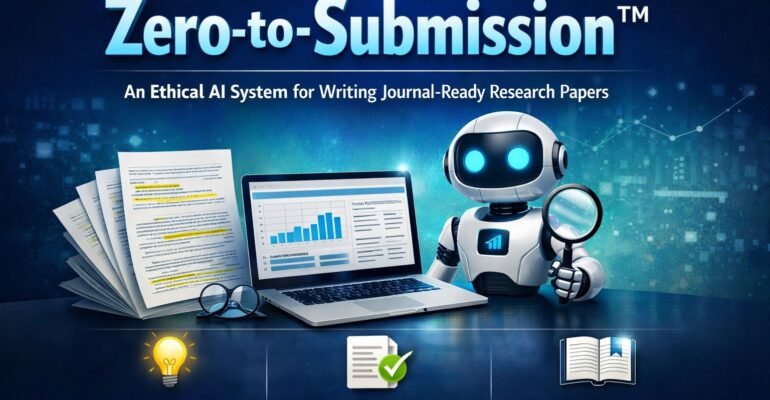
From Idea to Journal Submission: A 3-Day Ethical AI Research Paper System
About This Course
DAY 1: Thinking Like a Researcher (Foundation Day)
From vague topic → publishable research question
What learners will do:
- Learn how real researchers think before writing
- Stop guessing topics and start problem-driven research
- Understand where AI should and should NOT be used
Key Modules Covered:
- Step 0: Problem Thinking (Human-First)
- Topic vs problem vs research question
- The Explain-to-a-Non-Researcher test
- One-sentence research problem framework
- Converting a problem into a testable research question
- Ethical AI Boundary Setup
- When to open AI (and when not to)
- Using AI only for verification, not idea generation
- Safe prompts for checking originality & saturation
- Step 1: Research Question Refinement
- How editors silently judge research questions
- The 4 Editor Filters: scope, method, context, contribution
- Journal scope mapping using AI (ethical use)
- Human-led refinement of the final research question
Deliverables by End of Day 1:
- ✔ Clear, one-sentence research problem
- ✔ Final, publishable research question
- ✔ Shortlist of 2–3 suitable journals
DAY 2: Literature Review Without Plagiarism or AI Detection
Find less, think more, write better
What learners will do:
- Learn how to find only relevant literature
- Avoid drowning in PDFs
- Build a review that sounds human, critical, and original
Key Modules Covered:
- Step 2: Ethical Literature Discovery
- Using AI as a research librarian, not a writer
- Identifying core and anchor papers
- Inclusion–exclusion logic (what to keep, what to drop)
- Detecting debates, contradictions, and gaps
- Creating a clean theme map
- Thematic Structuring (A–B–C Model)
- Author A agrees
- Author B contradicts
- Author C extends
- Avoiding summary-style literature reviews
- Step 3: Human-Written Literature Review
- Sentence-by-sentence synthesis framework
- Why AI-written LRs get rejected
- How to sound critical, not descriptive
Deliverables by End of Day 2:
- ✔ Curated literature set
- ✔ Thematic table (thinking aid)
- ✔ Structurally ready literature review draft
DAY 3: From Review to Submission-Ready Paper
Methods, results logic, integrity & submission
What learners will do:
- Convert literature into objectives & hypotheses
- Build a clean conceptual framework
- Understand results, methodology, and integrity checks
- See the complete paper journey end-to-end
Key Modules Covered:
- Step 4: Writing the Introduction (Editor-Safe)
- Standard journal introduction flow
- Why introductions written first fail
- AI used only for structure, not prose
- Step 5: Objectives, Hypotheses & Conceptual Framework
- Gap → objective → hypothesis logic
- Clean variable mapping
- Beginner-friendly conceptual framework design
- Step 6: Methodology (High-Risk Section)
- Research design options
- Sampling & sample size logic
- Measurement using validated scales
- SPSS & PLS-SEM overview (no fake data)
- Step 7–10: Results to Submission
- Results structure & reporting conventions
- Discussion & conclusion logic
- Abstract writing & plagiarism reality
- Cover letter & live submission checklist
Deliverables by End of Day 3:
- ✔ Complete research paper structure
- ✔ Journal-ready abstract & cover letter
- ✔ Ethical AI confidence (no fear of detection)
- ✔ Clear submission roadmap
Curriculum
3 Lessons5h 28m
Day 1
Chapter2:09:12
Day 2
Day 3
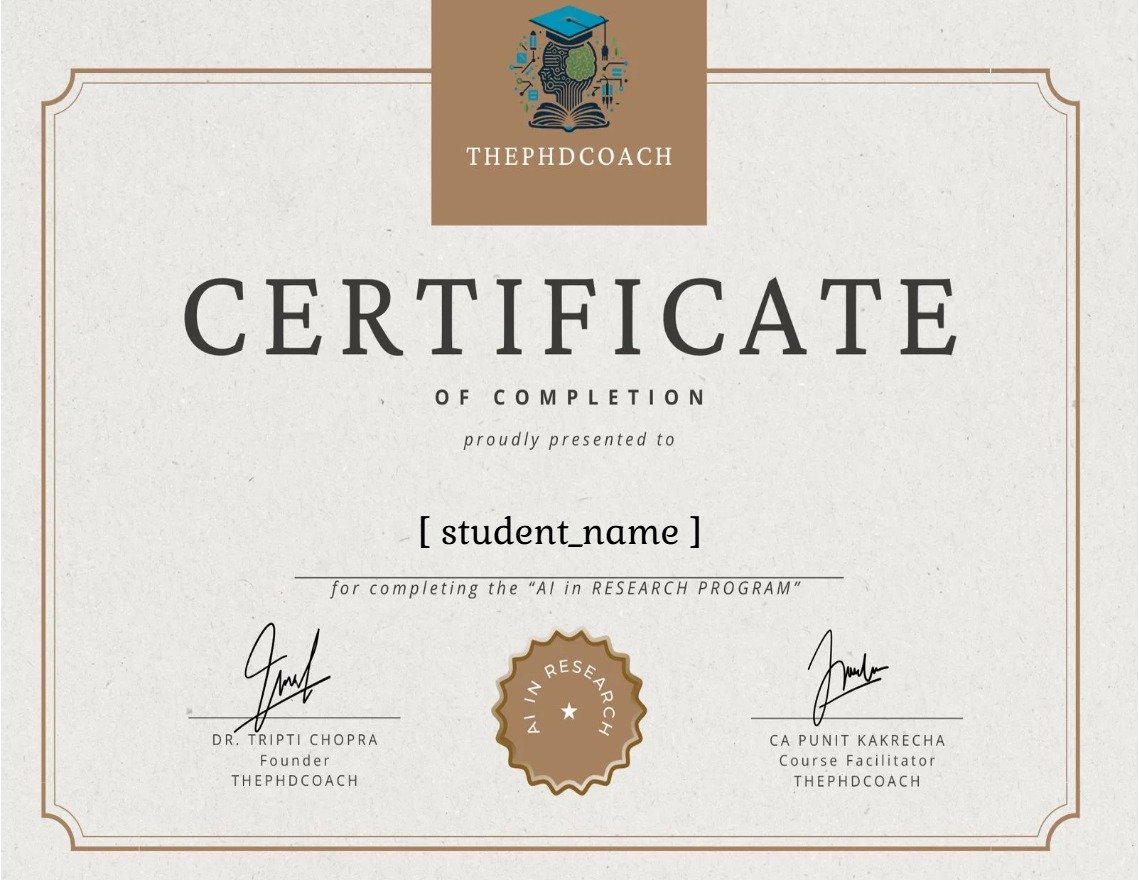
Earn a certificate
Add this certificate to your resume to demonstrate your skills & increase your chances of getting noticed.